-
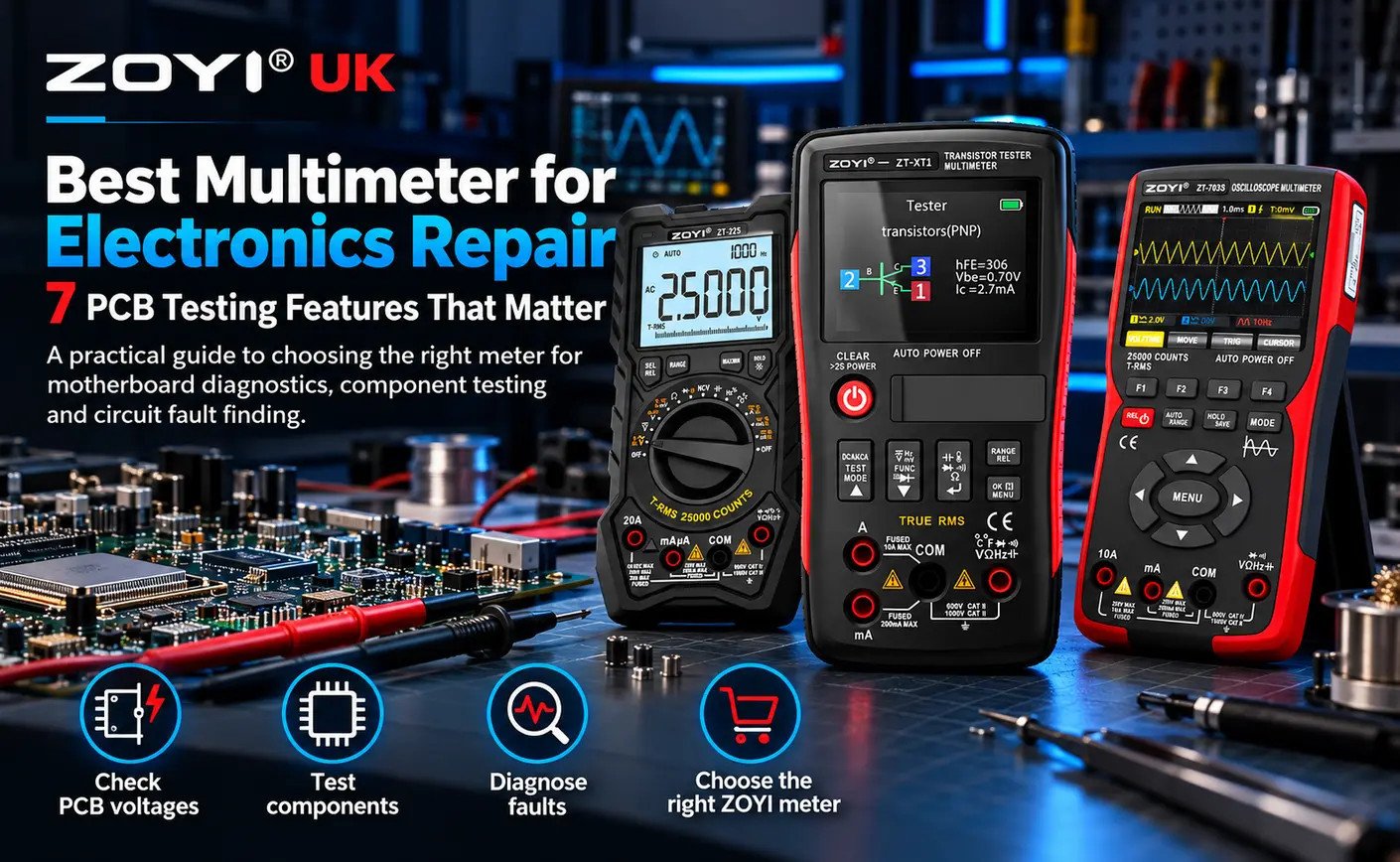 Best Multimeter for Electronics Repair? 7 PCB Testing Features Explained 10/15/2026 14:24:41
 How to Test Car Battery Parasitic Drain with a Multimeter 10/13/2026 14:26:33
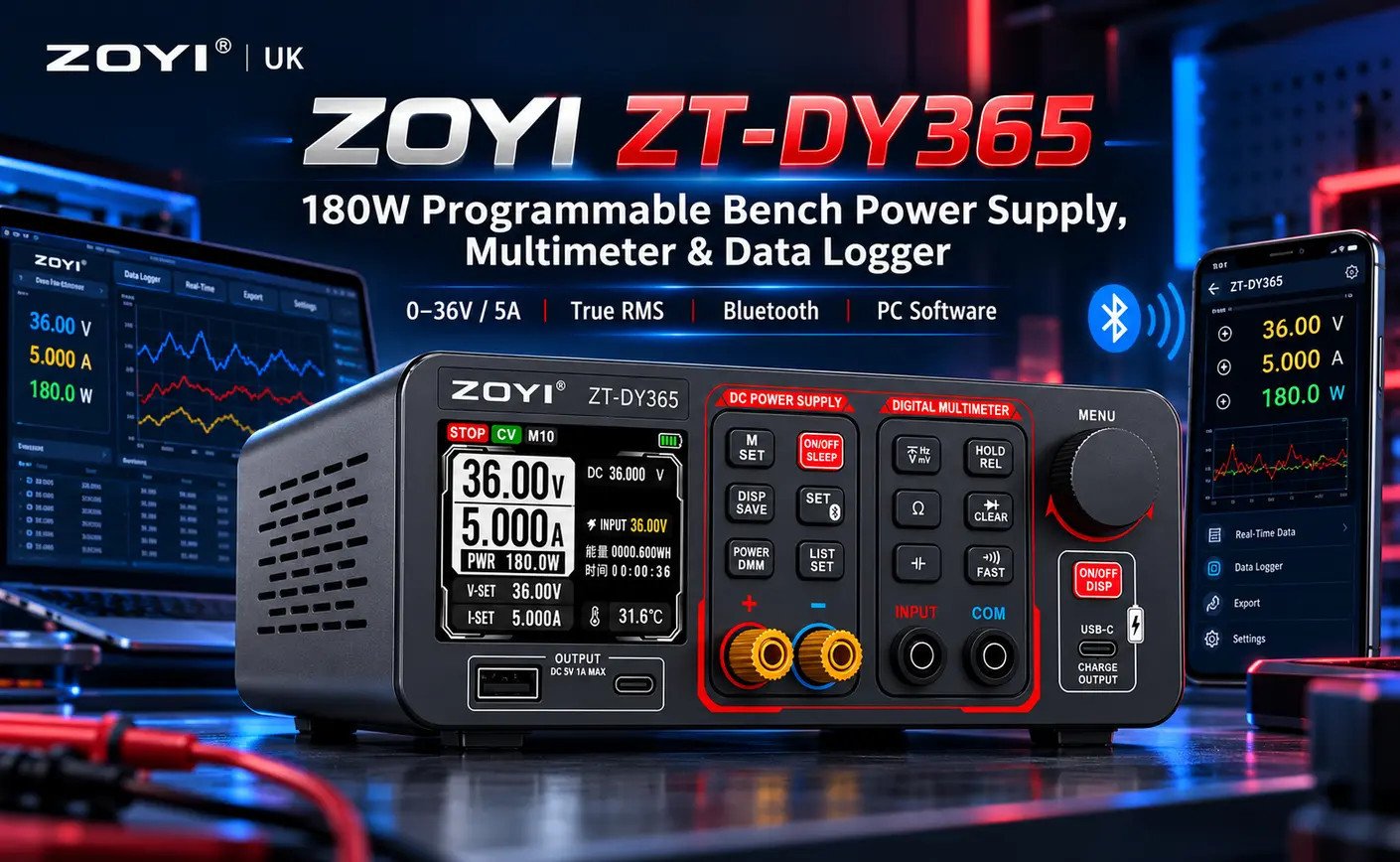 ZOYI ZT-DY365: A 180W Programmable Bench Power Supply, Multimeter & Data Logger in One 10/05/2026 21:27:51
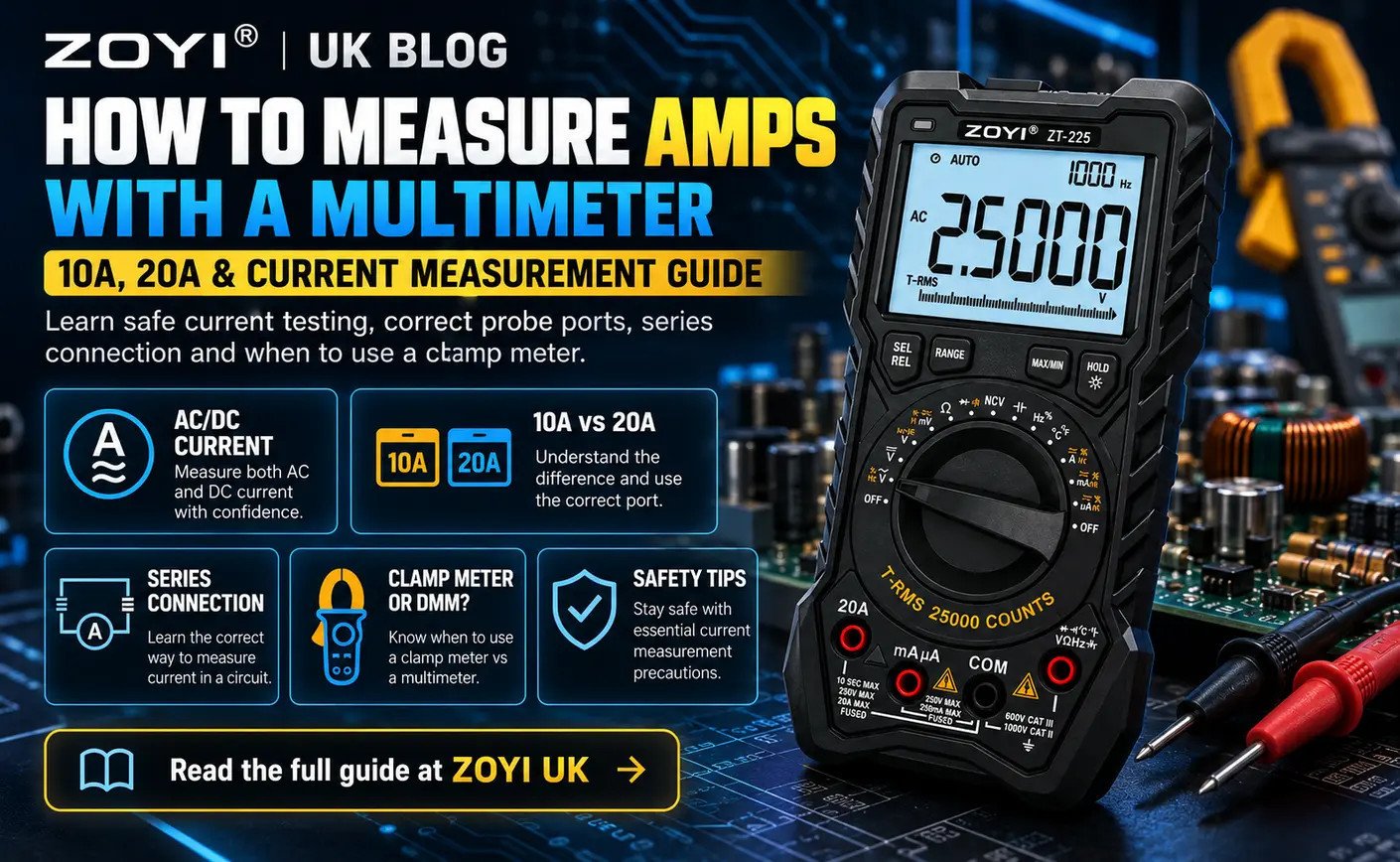 How to Measure Amps with a Multimeter: 10A, 20A & Current Measurement Guide 10/05/2026 11:30:01
Bench Power Supplies
Shop ZOYI bench power supplies and programmable DC power supplies for electronics repair, circuit testing, development and laboratory work.
Choose adjustable DC power supplies with precise voltage and current control, CV/CC operation and modern digital functions for PCB diagnostics, prototyping and professional electronics testing. UK stock with VAT-inclusive pricing and fast delivery.
There is 1 product.
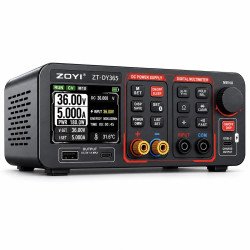
ZOYI ZT-DY365 combines a 180W programmable DC bench power supply with a 25,000-count True RMS digital multimeter. Adjustable 0–36V / 5A output with CV/CC modes, Bluetooth and PC connectivity, data logging and CSV export. Designed for electronics repair, PCB diagnostics, laboratory testing, R&D and development work.
Bench Power Supplies for Electronics Testing & Repair
A bench power supply provides a controllable source of DC voltage and current for testing, powering and troubleshooting electronic circuits. Unlike a fixed-voltage adapter, a bench supply allows the output to be adjusted for the circuit or device being tested and normally provides current limiting to help protect components during development and fault finding.
ZOYI bench power supplies are designed for electronics technicians, engineers, repair workshops, laboratories, education and development work. Depending on the model, features may include variable DC output, programmable control, digital displays, constant voltage and constant current operation, protection functions and connectivity for monitoring or data logging.
What Is a Bench Power Supply Used For?
- Powering electronic circuits during development and testing
- PCB and motherboard fault diagnosis
- Current-limited testing during electronics repair
- Prototyping microcontroller and embedded systems
- Testing components, modules and sensors
- Laboratory and engineering development work
- Education and electronics training
- Checking equipment at different DC voltage and current levels
Variable & Programmable DC Power Supplies
A variable DC power supply allows the user to adjust the output voltage and set an appropriate current limit for the connected circuit. This makes it substantially more useful for electronics development than a fixed-output power adapter.
A programmable DC power supply adds digital control and, depending on the model, may support features such as stored settings, remote control, measurement logging or software connectivity. These functions are particularly useful for repeated testing, development work and monitoring changes in voltage, current or power over time.
Constant Voltage and Constant Current Modes
Two of the most important functions to understand when choosing a bench power supply are Constant Voltage (CV) and Constant Current (CC).
Constant Voltage (CV)
In constant voltage mode, the power supply attempts to maintain the voltage selected by the user while the connected circuit draws the current it requires, up to the configured current limit.
This is the normal operating mode for many electronic circuits, development boards, control modules and general electronics testing.
Constant Current (CC)
In constant current mode, the supply limits the current to the value set by the user and reduces the output voltage as necessary. Current limiting is particularly useful when first powering an unknown or repaired circuit because it can help reduce the risk of further damage if a short circuit or excessive current draw is present.
Choosing the Right Bench Power Supply
The correct power supply depends on the voltage, current and maximum power required by the equipment you intend to test. It is normally sensible to choose a supply that provides some operating headroom above your typical requirements rather than selecting a unit that will constantly operate at its maximum rating.
Output Voltage
Check the maximum DC voltage required by the circuits you work with. Electronics repair and development may involve common rails such as 1.8V, 3.3V, 5V, 12V and 24V, while other equipment may require a wider adjustable range.
Output Current
The current rating determines how much current the supply can provide to the load. A higher current capability can be useful when working with motors, amplifiers, control systems or other devices that draw more power, while fine current limiting is valuable for sensitive electronics and fault diagnosis.
Maximum Power
Voltage and current must also be considered together because the power supply has a maximum wattage rating. Electrical power is calculated using:
Power (W) = Voltage (V) × Current (A)
Always check the individual product specification to confirm its permitted voltage, current and power combinations.
Bench Power Supplies for PCB Repair
A variable bench supply is particularly useful for PCB repair and electronics fault finding. Technicians can set a suitable voltage and a controlled current limit before applying power to a board, helping them observe current consumption and investigate abnormal behaviour.
Current-limited testing can also assist with short-circuit diagnosis when used with appropriate repair techniques and test equipment. Always work within the voltage, current and safety limits of the circuit being examined.
Protection Features
Modern bench power supplies may include several protection functions designed to protect the instrument and connected equipment. The exact protections vary by model, so always check the individual specification before purchase.
Common functions include Over-Voltage Protection (OVP), Over-Current Protection (OCP), Over-Power Protection (OPP), Over-Temperature Protection (OTP) and short-circuit protection.
Digital & Smart Bench Power Supplies
Modern digital bench power supplies can offer considerably more than basic voltage adjustment. Depending on the instrument, additional functionality can include digital setting controls, stored presets, graphical monitoring, Bluetooth connectivity, PC software or measurement data logging.
These capabilities are useful for engineers who need to monitor how a circuit behaves over time or repeat the same test conditions consistently.
Bench Power Supplies for Laboratory & Development Work
A regulated laboratory power supply is useful for R&D, product development, educational laboratories and electronics workshops because voltage and current can be controlled independently of the circuit under test.
Typical applications include prototype development, microcontroller testing, component evaluation, circuit troubleshooting, repair work and powering modules during measurement with a multimeter or oscilloscope.
Complete Your Electronics Test Bench
A bench power supply is normally used alongside other electrical measurement equipment. For voltage, current, resistance, continuity and general electrical measurements, explore our digital multimeters.
For waveform analysis, signal investigation and more advanced electronics diagnostics, see our oscilloscope multimeters and signal generators.
For capacitor, resistance, inductance, ESR and component analysis, browse our component testers and LCR meters.
For battery voltage and internal-resistance testing, see our battery testers.
Bench Power Supply FAQs
What is a bench power supply?
A bench power supply is a test instrument that provides controlled electrical power to a circuit or device. Most electronics bench supplies provide adjustable DC voltage together with an adjustable current limit.
What is the difference between a bench power supply and a normal power adapter?
A normal adapter usually provides one fixed voltage for a specific device. A bench power supply is designed for testing and development, allowing voltage and current limits to be adjusted for different circuits and applications.
What does CV mean on a power supply?
CV means Constant Voltage. In this mode the power supply maintains the selected voltage while the load draws the required current, provided the configured current limit is not exceeded.
What does CC mean on a bench power supply?
CC means Constant Current. When the configured current limit is reached, the supply regulates the current and reduces the voltage as required to prevent the current from exceeding the set value.
Why is current limiting useful for electronics repair?
Current limiting allows a technician to restrict the maximum current supplied to a circuit. This can be particularly useful when powering a repaired or unknown PCB because excessive current consumption can indicate a fault or short circuit.
What voltage bench power supply should I buy?
Choose a voltage range that covers the devices you normally work with and provides reasonable headroom. Also consider maximum current and wattage, because all three specifications determine whether the supply can safely power the intended load.
What is a programmable DC power supply?
A programmable power supply allows output settings to be controlled digitally. Depending on the model, this can include stored presets, automated sequences, computer control, wireless control or measurement logging.
Why Buy ZOYI Bench Power Supplies from ZOYI UK?
ZOYI UK supplies genuine ZOYI electrical and electronics test equipment for technicians, engineers, repair professionals and electronics users. Product pages provide detailed specifications so you can compare voltage range, current capability, power rating, measurement functions and connectivity before choosing the right instrument for your work.
Browse the available ZOYI bench power supplies above and check each product page for its complete technical specification, supplied accessories and available functions.

Bench Power Supplies